A 20-year-old man was preparing to marry his 17-year-old fiancée when he received heartbreaking news. She had allegedly cheated on him with his 21-year-old cousin during a celebration the night before their wedding.
The situation was even more painful because of their history. His fiancée had previously dated his cousin before starting a four-year relationship with him. Although the two men had not always been close, they had recently managed to repair their relationship.
After learning what happened, the groom immediately called off the wedding.
However, the situation became more difficult when several family members began asking him to forgive his fiancée. Her family and even their great-grandmother wanted him to reconsider and go ahead with the marriage.
Now, he feels torn between his love for her and the betrayal he cannot forget. He is struggling to decide whether their relationship can ever recover or whether calling off the wedding was the right choice.




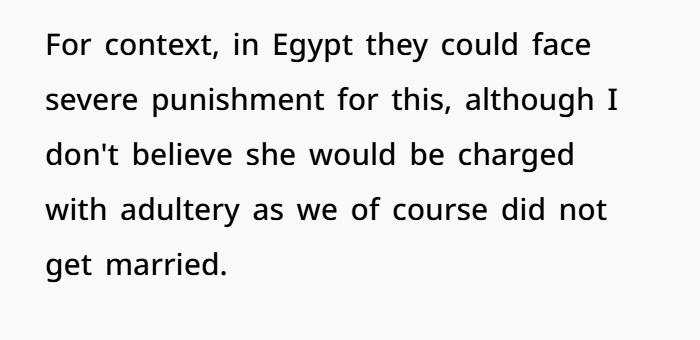


This situation goes beyond an ordinary case of cheating. The groom believes both his future wife and his own cousin betrayed him. That leaves him dealing with two painful losses: trust in his partner and trust in his family.
The timing makes everything even harder. Instead of discovering the alleged affair during an ordinary stage of their relationship, he learned about it just one day before the wedding. A day meant to celebrate love and commitment suddenly became filled with heartbreak, embarrassment, and uncertainty.
He says he spent weeks crying and thinking about what happened. This suggests that he is still struggling to process the shock. Such emotional distress can affect sleep, appetite, focus, work, and daily life. It does not automatically mean he has a mental health disorder, but speaking with a licensed therapist could help him work through these feelings.
For now, making a major decision under family pressure could make things worse. Canceling or postponing a wedding does not mean he must end the relationship forever. It simply gives him time to think without the pressure of wedding plans, family expectations, and social judgment.
Can Trust Be Rebuilt After Infidelity?
Some couples manage to rebuild their relationships after cheating. However, love alone is rarely enough to repair broken trust. Reconciliation takes honesty, responsibility, lasting change, and a genuine effort from both people.
The Gottman Institute describes affair recovery in three main stages: atonement, attunement, and attachment.
In simple terms, the person who cheated must first accept responsibility without making excuses. Both partners then need to understand what happened and deal with the emotional damage. Over time, they can work toward building a safer and more trusting relationship.
But getting back together is a choice, not an obligation.
The groom does not owe anyone a marriage just because the wedding was planned or relatives want to avoid embarrassment. If he believes he will always question his partner’s honesty, getting married could create even more problems.
Relationship counseling may help him decide whether rebuilding trust is possible. However, therapy should never be used to pressure him into forgiving her or setting another wedding date.
Individual counseling may be a better first step. It would give him space to process the betrayal and decide what he truly wants.
Family Pressure Should Not Decide His Future
The relatives asking him to continue with the marriage may have different reasons. They might worry about family reputation, cultural expectations, or long-term disagreements between relatives.
But none of these concerns should come before his right to choose whether he wants the marriage.
Forgiving someone is also different from taking them back. He may eventually let go of his anger while still deciding to end the relationship. Accepting an apology does not mean he must restore the relationship or agree to marry.
Before considering reconciliation, he should think about a few important questions:
- Has his former fiancée accepted responsibility without making excuses?
- Has she ended all contact with his cousin?
- Was this an isolated incident, or were there earlier secrets?
- Does he genuinely want to rebuild the relationship, or is he giving in to family pressure?
- Can he realistically trust her again without constant suspicion?
- Are both willing to seek professional relationship counseling?
If these questions remain unanswered, there is no reason to rush into another wedding.
The Age Difference Raises Important Legal Questions
The ages mentioned in this story also deserve attention. The former fiancée is reportedly 17, while the cousin is 21.
The legal situation depends on where the incident happened, local age-of-consent laws, and whether the encounter was genuinely consensual.
The groom should not rely on family opinions or online comments for legal advice. If there are concerns about coercion, exploitation, or a possible crime, speaking privately with a qualified local lawyer or safeguarding professional would be a sensible step.
The emotional question of whether the relationship should continue is separate from the legal question of whether an offense occurred.
Neither should be used to pressure anyone into making a decision.
He Deserves Time to Make His Own Decision
After spending four years with someone, imagining life without them can feel overwhelming. The groom also worries that he may never find someone like his former fiancée again.
That fear is understandable, especially after such a painful experience. But fear of being alone is not a good reason to enter a marriage.
At 20, he has plenty of time to heal, understand what he wants, and build a healthy relationship in the future.
If he ever considers reconciliation, it should happen slowly. There should be clear boundaries, full honesty, personal accountability, and professional counseling. He should also feel completely free to walk away if trust cannot be restored.
Calling off the wedding gave him space to think before making a lifelong commitment. He does not need to make another decision just to satisfy his family.
In the end, the decision belongs to him. He can forgive, reconcile, or move on. What matters is that he chooses his future freely, without guilt, pressure, or fear of disappointing others.hould belong to him—not to relatives worried about appearances or family reputation.
See the comments to know what people said

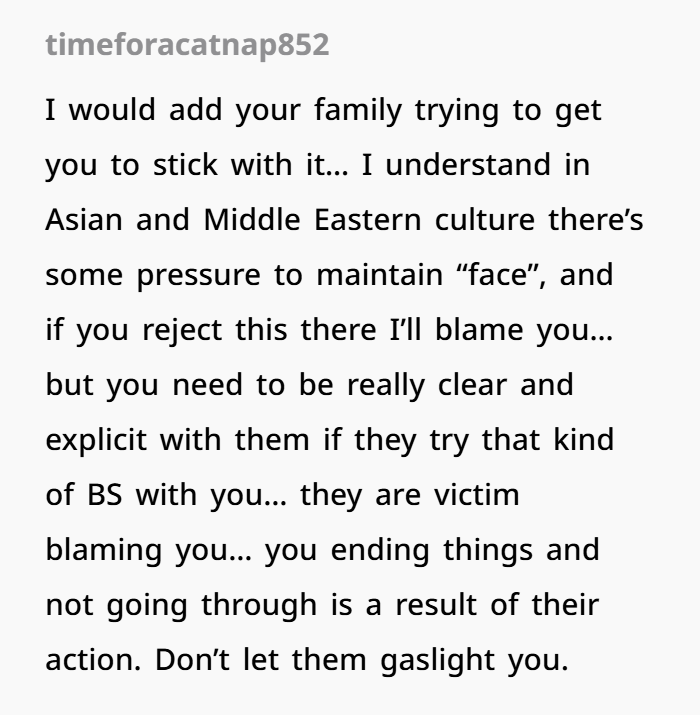
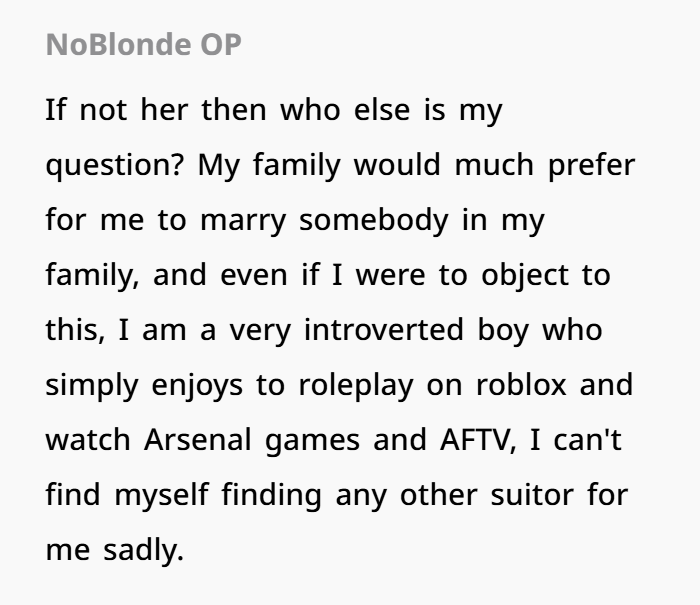

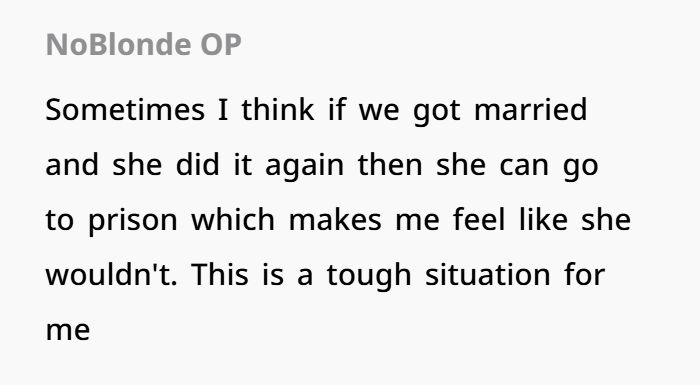


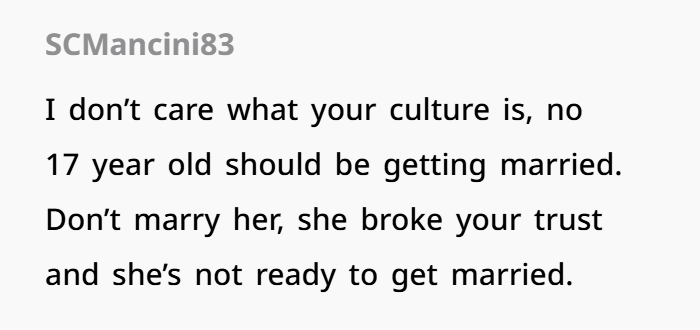
The groom is facing a painful decision after being betrayed by both his fiancée and his cousin. Calling off the wedding gave him time to think. Marriage should not begin with broken trust, family pressure, and unanswered questions.
He may still love his former fiancée, but love alone cannot repair a damaged relationship. Rebuilding trust takes honesty, accountability, clear boundaries, and a genuine effort from both people. Professional relationship counseling may also help. However, forgiveness does not mean he has to marry her.
Since the situation involves a minor and an adult, any legal concerns should be discussed privately with a qualified local attorney.
In the end, he deserves time to decide what is best for his future. Neither family should pressure him into a decision. His emotional well-being and happiness matter more than wedding plans or family reputation.